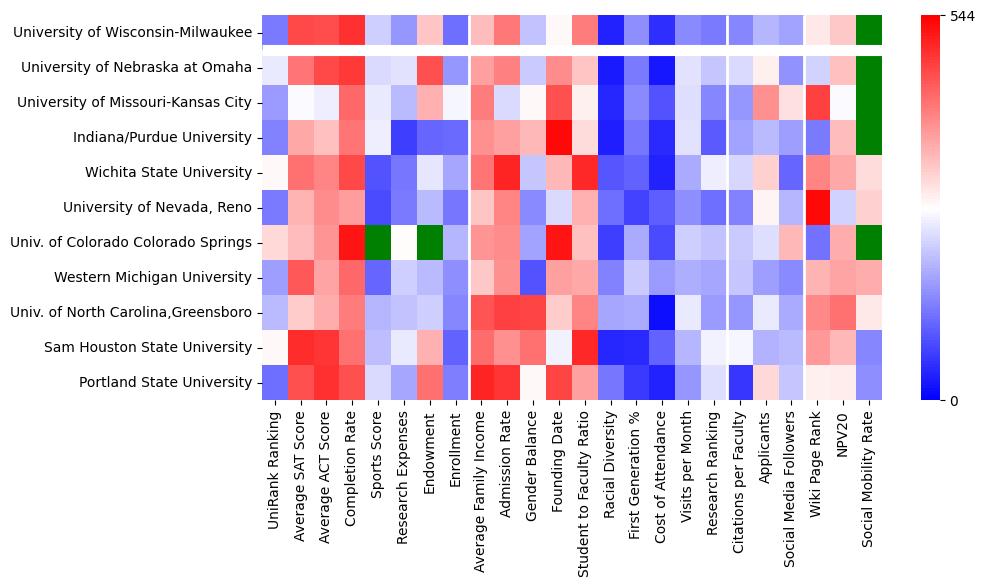
The University of Wisconsin-Milwaukee (UWM) was established in 1956 through the merger of Milwaukee State Teachers College and the University of Wisconsin Extension Division in Milwaukee. This public research university is located in Milwaukee, Wisconsin, and is part of the University of Wisconsin System. As one of the two doctoral degree-granting public institutions in Wisconsin, UWM has developed a strong reputation for its commitment to research and community engagement. With a diverse student body of over 24,000 students, UWM offers more than 200 academic programs across its 15 schools and colleges.
What sets UWM apart is its strong connection to the city of Milwaukee and the opportunities it provides for experiential learning. The university's location in Wisconsin's largest city allows for robust partnerships with local businesses, cultural institutions, and government agencies. These partnerships enable students to engage in internships, research projects, and community service, which significantly enhance their educational experience. UWM is also notable for its dedication to inclusivity and diversity, continually striving to create an environment that supports students from various backgrounds.
Academically, UWM is recognized for its research output and innovative programs. It is classified as an R1: Doctoral University with very high research activity by the Carnegie Classification of Institutions of Higher Education. The School of Freshwater Sciences, the only graduate school of its kind in the United States, is a standout program, offering unique opportunities in freshwater research. Additionally, the Lubar School of Business and the College of Nursing are highly regarded, with strong industry ties that benefit students. The Peck School of the Arts, which offers programs in film, dance, music, and theater, is also a highlight, attracting creative talents from across the country.
Despite its strengths, UWM faces challenges typical of large urban public universities. Budget cuts in recent years have strained resources, impacting faculty hiring and maintenance of facilities. Some students have expressed concerns about class sizes and the availability of courses needed for timely graduation. Additionally, while the university is making strides in improving its retention rates, there is still work to be done in supporting student success and graduation rates. Nonetheless, UWM continues to focus on overcoming these challenges, aiming to provide a high-quality education while maintaining its commitment to access and inclusivity.